Carpet Area vs SBA vs UDS Explained Simply
Featured Image of Carpet Area Vs Sba Vs Uds Explained Simply


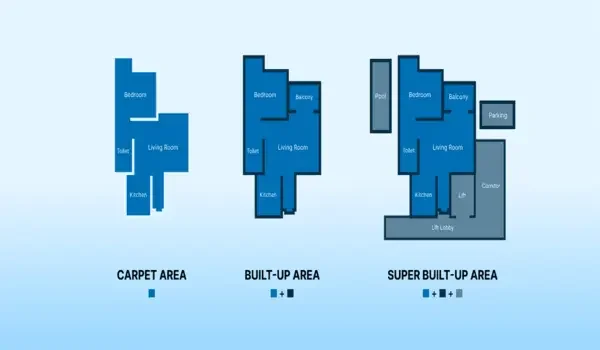
Carpet area is the actual floor space inside your flat, the part you can walk on and furnish. Super built-up area (SBA) is the total area your builder bills you for, since it adds shared common spaces to your carpet area. Undivided share of land (UDS) is the fraction of the project's land that legally belongs to you once you buy an apartment.

If you are evaluating a flat at on Whitefield-Hoskote Road in East Bangalore, or any apartment project in India, these three numbers answer three different questions. Carpet area tells you how much room you actually get inside your walls. SBA tells you how your price per square foot gets calculated. UDS tells you how much land you legally own, and that number matters for resale value and loan approvals years down the line.

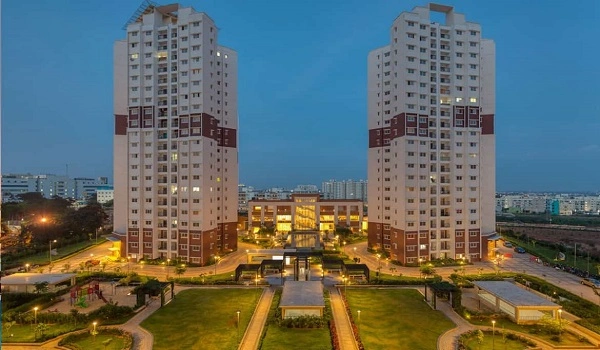
What Is Carpet Area? Your Real Living Space


The Real Estate Regulation and Development Act, 2016 (RERA) defines carpet area as the net usable floor area inside your flat. It includes the internal partition walls between your rooms, but it leaves out external walls, service shafts, columns, and the area under open balconies.

Think of it this way. If you rolled out a carpet across every room in your flat, wall to wall, the total area it covers is your carpet area. RERA makes builders disclose this exact figure in every sale agreement, so you know precisely how much usable space you are paying for.

Brigade Granada offers 3 BHK apartments in a size range of 1400 to 2200 sq ft, based on the builder's current specification. The project's RERA registration is expected in 2026, and once it comes through, the exact carpet area for each configuration will appear in the official agreement. Going by the loading factors typical of large gated townships, you can expect the carpet area to work out to roughly 65% to 70% of this stated size, though the confirmed figure will only be available after RERA approval.

What Is Super Built-Up Area (SBA)? The Number That Decides Your Price


SBA, sometimes called saleable area, is what builders use to price your flat. It adds your carpet area to the thickness of your walls, your private balcony, and a proportionate share of the common areas across the project.

SBA usually bundles in shared spaces like these.

  • Entrance lobby and lift lobbies on your floor
  • Staircases and internal corridors
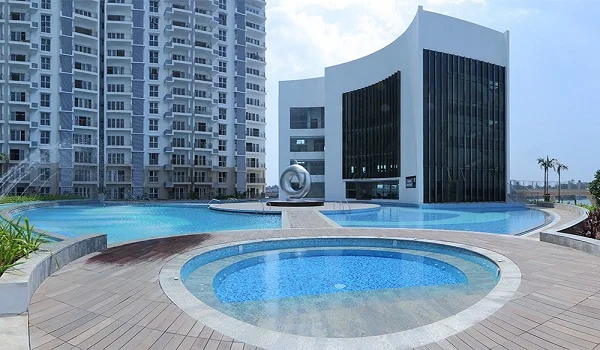
  • Clubhouse and other shared amenity blocks
  • Security cabins, generator rooms, and other service areas

What Is the Loading Factor?


The gap between your carpet area and your SBA has a name. It is called the loading factor, and builders express it as a percentage.

You calculate it this way. Loading factor equals SBA minus carpet area, divided by carpet area, multiplied by 100.

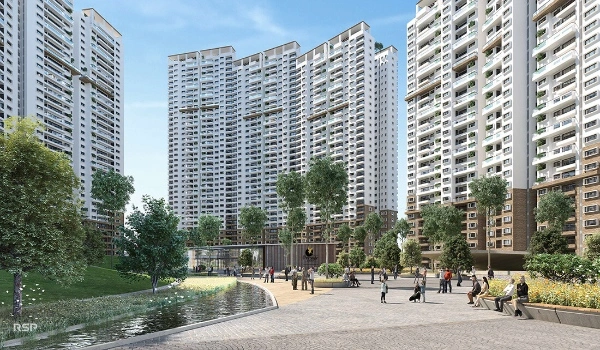
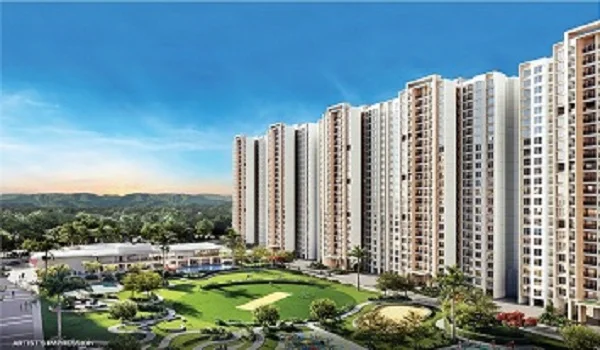
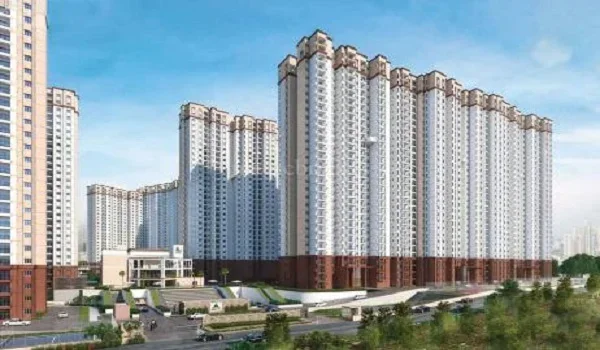
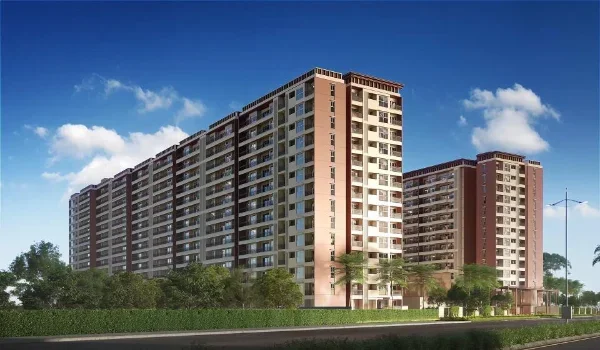
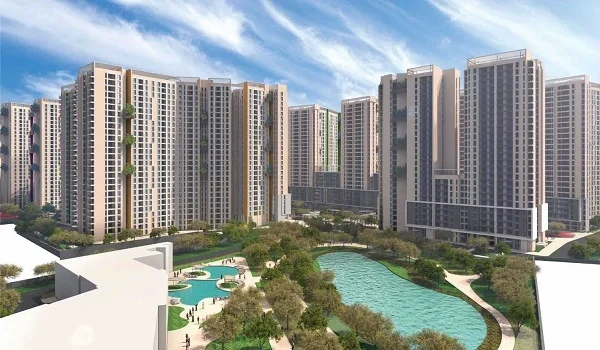
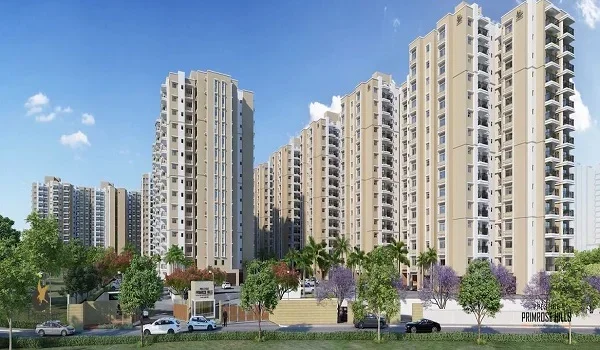
Large gated communities with more shared amenities usually carry a higher loading factor, often somewhere between 25% and 35%. Brigade Granada spreads across 40 acres with 14 towers and around 2,000 planned apartments, and the developer has kept 80% of that land as open, green space. Projects with this much shared infrastructure tend to sit at the higher end of that range, since your SBA also funds your share of the gardens, walkways, and clubhouse.

What Is Undivided Share of Land (UDS)? Your Legal Ownership in the Plot


UDS is the portion of the total land parcel that belongs to you once you buy a flat in a multi-storey building. You cannot walk up to a specific patch of the 40-acre Brigade Granada site and call it yours alone. Instead, you own a fraction of the whole plot, and that fraction depends on the size of your flat.
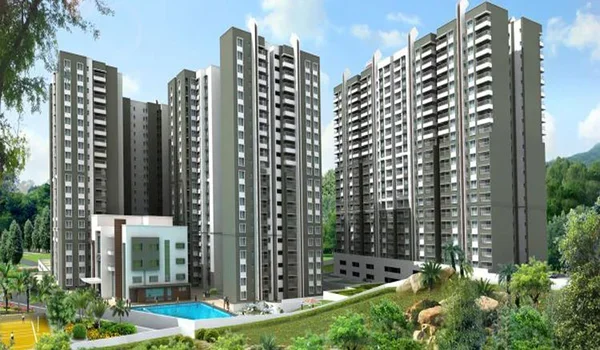
Here is how it works out in practice. Your UDS equals your flat's SBA divided by the total SBA of every flat in the project, multiplied by the total land area.
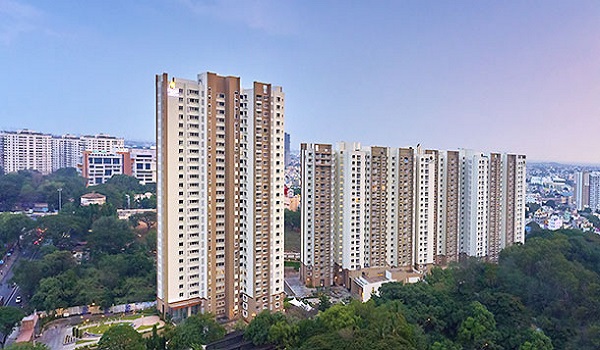

Why should this number matter to you? A building depreciates with age, but land in a growing micro-market rarely loses value. Brigade Granada sits on Whitefield-Hoskote Road, close to the IT corridors of Varthur, Sarjapur Road, and Whitefield, and a clearly stated UDS in your sale deed protects your claim to that land value as the area develops further.

With around 2,000 units planned across the township, buyers of larger 4 BHK apartments, sized between 2,500 and 2,800 sq ft, will naturally receive a bigger UDS than buyers of 2 BHK units sized between 1,000 and 1,300 sq ft. Your UDS always scales with your flat's share of the total built-up area.

Carpet Area vs SBA vs UDS at a Glance


Feature Carpet Area Super Built-Up Area (SBA) Undivided Share of Land (UDS)
What it measures Usable floor space inside your flat Total area used to price your flat Your legal share of the project land
RERA disclosure Mandatory in the sale agreement Used for cost calculation, not RERA-mandated Recorded in the sale deed
What it includes Rooms, kitchen, bathrooms, inner walls Carpet area, wall thickness, balcony, common areas A proportionate share of the total land parcel
Why it matters to you Shows how much room you actually get Decides your price per square foot Protects your land value over time
At Brigade Granada Confirmed once RERA approval comes through in 2026 Ranges from around 1,200 to 2,800 sq ft across configurations Scales with your flat's size across the 40-acre township

Why These Numbers Matter Before You Book a Flat


A few practical checks can save you confusion later.

  • Ask for the RERA carpet area figure in writing, not just the SBA quoted in brochure or ads.
  • Compare loading factors across projects in the same micro-market, rather than judging price per square foot alone.
  • Check that your sale deed clearly state your UDS, since banks often verify this before approving a home loan.
  • Remember that maintenance charges are usually billed on SBA, not carpet area, so plan your monthly budget accordingly.

FAQs


1. What is the main difference between carpet area, SBA and UDS?

Carpet area is the usable space inside your flat. SBA is the total area you get billed for, includings your share of common areas. UDS is your legal ownership stake in the land under your building.

2. Why is my flat's SBA bigger than its carpet area?

SBA adds wall thickness, your balcony, and a share of common spaces like lobbies, staircases, and amenity blocks to your carpet area. This gap is called the loading factor, and it usually falls between 25% and 35% in large gated projects.

3. Does RERA require builders to declare carpet area?

Yes. Under RERA 2016, every builder must state the carpet area clearly in the sale agreement. This rule protect you from vague area claims that quietly inflate your effective price per square foot.

4. What is a reasonable loading factor for a township like Brigade Granada?

Large townships with extensive amenities and open space, such as Brigade Granada's 80% green cover across 40 acres, typically carry a loading factor in the 25% to 35% range. A higher loading factor makes sense when it funds real shared infrastructure you will actually use.

5. Why does UDS matter for a home loan or resale later?

Banks check your UDS entry before sanctioning a home loan, since it confirms your legal stake in the land. A clearly stated UDS also protects your resale value, because land tends to appreciate even as the building itself ages.

6. Does my balcony count as carpet area under RERA?

No. RERA carpet area excludes open balconies and terraces, even though brochures sometimes fold in a portion of balcony area separately. Always check whether a quoted figure is carpet area or SBA before you compare prices across project.

Brigade Granada Blog


Enquiry
Enquire Now